
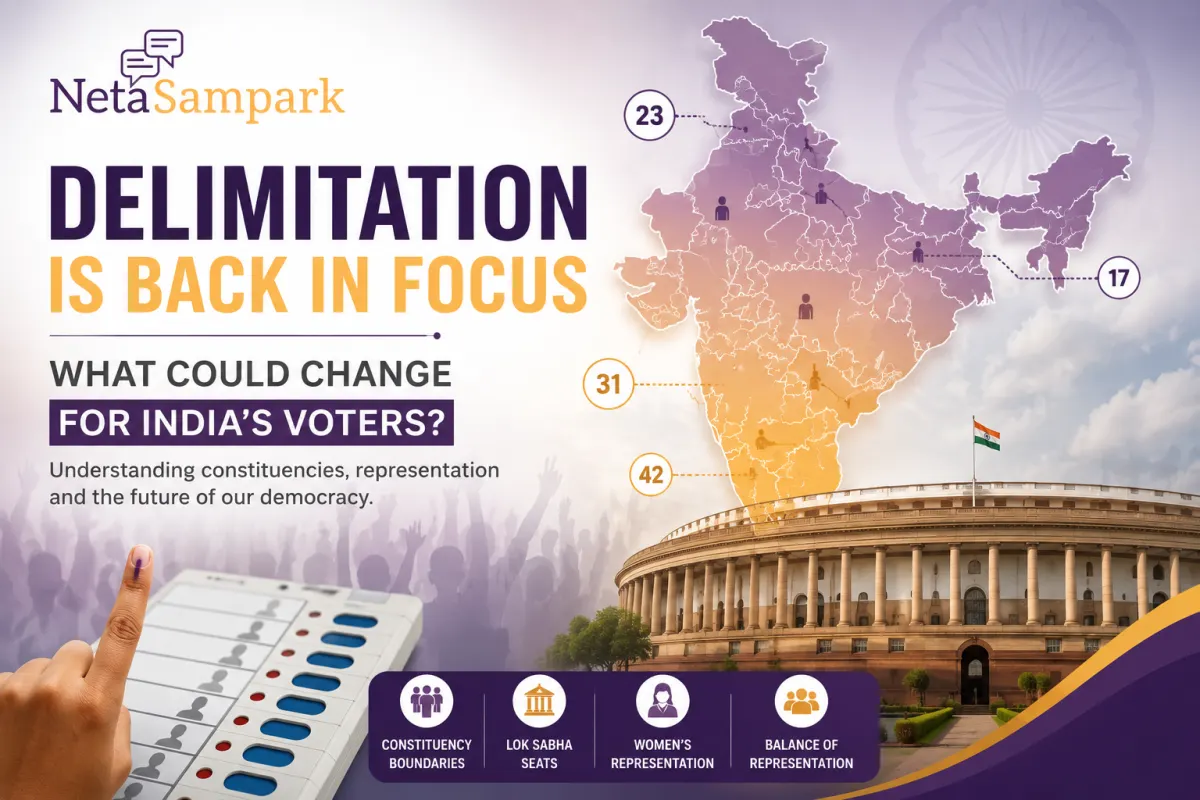
India’s delimitation debate is once again in focus. At its core, delimitation is about how parliamentary constituencies are drawn and how representation is distributed across the country. While the issue may sound technical, its impact could eventually be felt by millions of voters.
What is delimitation?
Delimitation is the process of redrawing the boundaries of electoral constituencies so that representation broadly reflects changes in population.
For Lok Sabha elections, this can mean changing constituency boundaries and, depending on the constitutional framework adopted, reallocating the number of seats among states.
India has historically placed a freeze on the redistribution of Lok Sabha seats between states to avoid penalising states that successfully controlled population growth. That arrangement has made the issue particularly important as India's population has changed significantly over the decades.
Why is the issue back in focus?
The debate has gained renewed attention as the government and political parties discuss how future parliamentary representation should be structured.
A major question is how India can balance two principles: representation based on population and recognition of the efforts made by states to control population growth.
The government has discussed increasing the overall strength of the Lok Sabha, potentially allowing states to receive more seats without dramatically changing their relative share of representation.
However, the final outcome will depend on the constitutional and legislative decisions ultimately taken by Parliament.
Why are southern states concerned?
Southern states such as Karnataka, Tamil Nadu and Kerala have generally experienced slower population growth and lower fertility rates than several northern states.
This creates an important question: if representation is redistributed primarily according to current population, could states that successfully controlled population growth see their relative political influence decline?
The concern is not simply about the number of seats a state receives. It is also about the state's share of the total Lok Sabha.
The government has argued that a larger Lok Sabha could allow southern states to gain seats while broadly protecting their existing share of representation.
What could it mean for Karnataka?
Karnataka currently has 28 Lok Sabha seats.
Under a government-discussed model, Karnataka's representation could potentially increase to 42 seats if the Lok Sabha were expanded substantially.
These figures are part of a proposed framework and should not be treated as a final allocation.
For Karnataka voters, however, the debate matters because delimitation could eventually affect constituency boundaries, the areas included within a constituency and the number of MPs representing the state.
What does delimitation mean for an ordinary voter?
For most citizens, the most visible change could eventually be their constituency itself.
If boundaries are redrawn, a voter could find that their Lok Sabha constituency includes different towns, villages or neighbourhoods than it does today.
The name or boundaries of the constituency could change, and political parties and candidates would have to campaign across newly configured areas.
At a broader level, changes in the number of parliamentary seats could also alter the balance of representation between different parts of India.
What about women's representation?
Delimitation is also closely connected to the implementation of the constitutional provision providing for one-third reservation for women in the Lok Sabha and state legislative assemblies.
The timing and mechanism for implementing this reservation have therefore become an important part of the wider delimitation discussion.
If the process moves forward, it could significantly change the composition of India's elected legislatures.
Will delimitation affect the 2029 election?
It would be premature to assume that the next Lok Sabha election will automatically be conducted using newly delimited constituencies.
The timing will depend on the legislation, constitutional changes, census-related processes and the actual delimitation exercise.
The government has previously indicated that elections through 2029 would continue under the existing arrangement, while discussions focus on the framework that could follow.
Why should voters pay attention?
Delimitation is ultimately about representation.
It determines how electoral constituencies are organised and can influence how India's changing population is translated into parliamentary representation.
For voters, the important questions are not just how many seats a state gains or loses, but also how fairly constituencies are represented, how population growth is accounted for and how the political voice of different regions is balanced.
As the debate develops, citizens should look beyond political headlines and understand the actual proposals being considered.
For voters, delimitation is not just about numbers on a map. It is about who represents them in Parliament—and how India's changing population shapes that representation.
Official sources
Confirm fees, dates and eligibility on the official page before you act.