
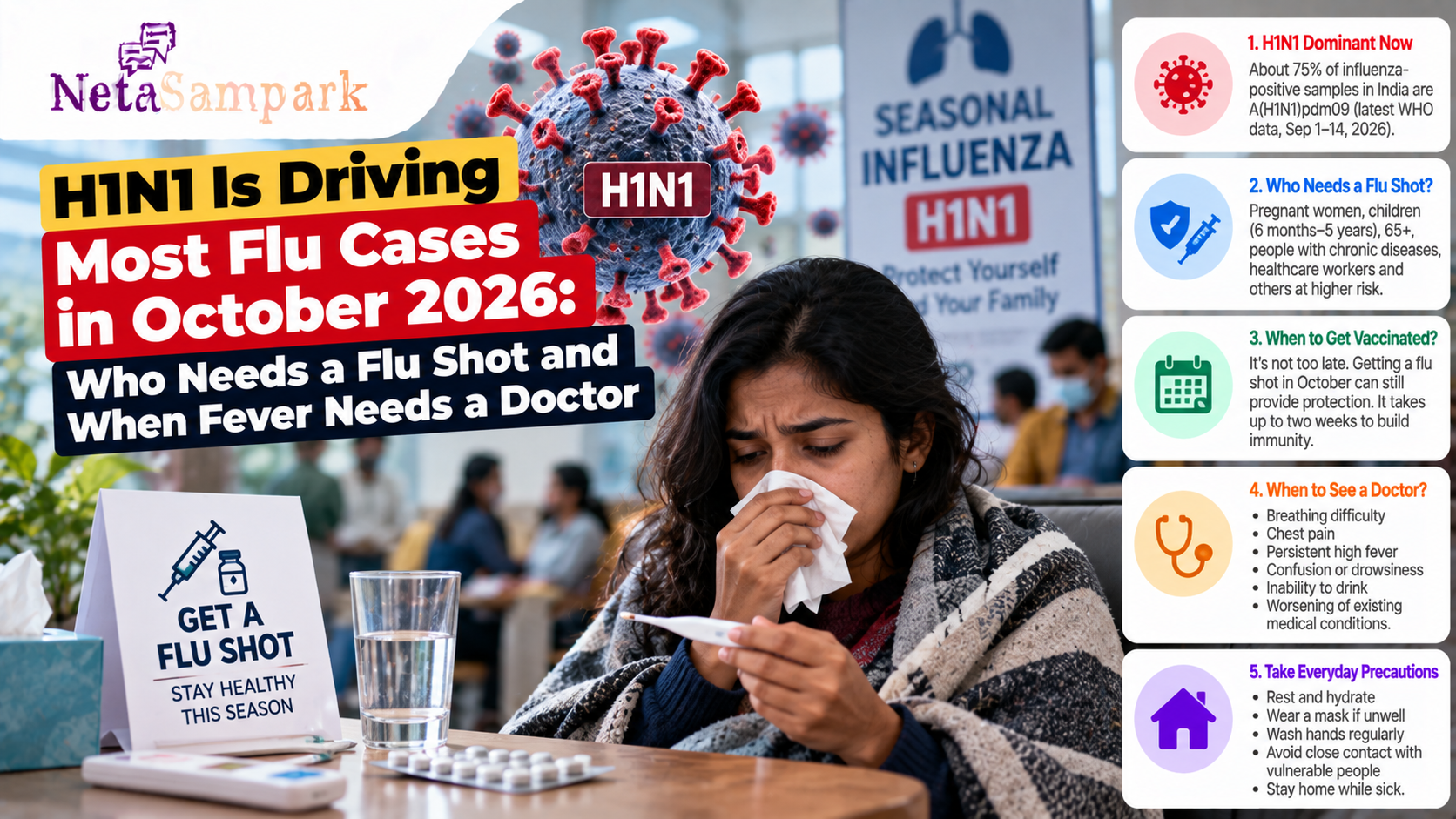
H1N1 Is Driving Most Flu Cases in October 2026: Who Needs a Flu Shot and When Fever Needs a Doctor
India is seeing a noticeable rise in seasonal influenza as the post-monsoon period continues, with A(H1N1)pdm09 currently accounting for about 75% of influenza-positive samples in the latest WHO surveillance data for India. The data covers September 1–14, 2026, so it is better understood as a current surveillance signal rather than proof that every fever or flu-like illness is H1N1. The Times of India
For most healthy people, influenza gets better with rest, fluids and symptom care. But flu can become serious in older adults, young children, pregnant women and people with chronic diseases or weakened immunity. World Health Organization
What is H1N1?
H1N1 is a subtype of influenza A. The virus that caused the 2009 pandemic subsequently became part of the seasonal influenza viruses that continue to circulate.
That means today's H1N1 should not automatically be treated as the same situation as the 2009 pandemic.
Seasonal influenza can cause:
- Sudden fever
- Dry or persistent cough
- Sore throat
- Headache
- Muscle and joint aches
- Marked tiredness
- Runny or blocked nose
- Chills in some people
WHO notes that most people recover within about a week, although cough and fatigue can last longer. World Health Organization
Why H1N1 is getting attention in October 2026
The latest WHO surveillance data available for India showed A(H1N1)pdm09 in 75% of influenza-positive samples, making it the dominant detected influenza strain in that reporting period. The Times of India
India also commonly sees influenza activity around the post-monsoon period, although the timing and intensity can differ between States and years. NCDC guidance identifies August–October as one of India's usual influenza peaks. NCDC
So a rise in flu-like illness during October is not unexpected.
But not every fever is H1N1. Dengue, COVID-19, other respiratory viruses, malaria and bacterial infections can produce overlapping symptoms. Testing and clinical examination may be necessary when symptoms are significant or the person is at higher risk.
Who should consider a flu shot?
WHO recommends annual influenza vaccination particularly for people at higher risk of severe influenza, including:
- Pregnant women
- Children 6 months to 5 years
- Adults aged 65 and above
- People with chronic medical conditions
- People with weakened immune systems
- Healthcare workers
- Others specifically identified as high-risk by their doctor or local health authorities World Health Organization
NCDC's Indian guidance similarly identifies young children, older adults, pregnant women, healthcare workers and people with conditions such as lung disease, heart disease, diabetes, kidney/liver disease, blood disorders or immunocompromising conditions as higher-risk groups. NCDC
What if you are a healthy adult?
A healthy adult may also choose vaccination after discussing it with a doctor, particularly if they have frequent exposure to crowded environments, healthcare settings or vulnerable family members.
The decision should take into account the vaccine available locally, current seasonal recommendations, age, pregnancy status and medical history.
Is October too late to get vaccinated?
Not necessarily.
WHO says vaccination is ideally given before the main period of increased influenza activity, but getting vaccinated later can still provide protection. It can take up to about two weeks for the body to develop protective antibodies. World Health Organization
For countries such as India where influenza can circulate throughout the year and have more than one seasonal peak, WHO recommends using local surveillance information when deciding vaccination timing. World Health Organization
So if you are considering a flu vaccine in October, don't assume the window has already closed.
Does the flu vaccine specifically protect against H1N1?
Seasonal influenza vaccines are designed to protect against the influenza strains expected to circulate during the relevant season.
For the 2026–27 Northern Hemisphere season, WHO's recommended vaccine composition includes an A(H1N1)pdm09-like virus, along with H3N2 and influenza B components. World Health Organization
The exact protection provided can vary because influenza viruses continually evolve, but vaccination remains the best-established way to reduce the risk of influenza and severe outcomes. World Health Organization
You have fever. When should you see a doctor?
A mild flu-like illness in an otherwise healthy adult can often be managed at home initially.
But don't wait at home if symptoms are severe, rapidly worsening or occurring in a high-risk person.
Seek prompt medical assessment if there is:
- Difficulty breathing or shortness of breath
- Chest pain or pressure
- Bluish lips or face
- Confusion, unusual drowsiness or difficulty staying awake
- Severe weakness
- Persistent or worsening high fever
- Inability to drink or signs of dehydration
- Repeated vomiting
- Coughing up blood
- A significant worsening after initially improving
- Worsening of an existing heart, lung, kidney or other chronic condition
NCDC's influenza guidance specifically flags breathlessness, chest pain, drowsiness, low blood pressure, blood-stained sputum, bluish discoloration and worsening chronic disease as warning signs requiring urgent medical attention. NCDC
Pregnant women, children and older adults need extra caution
Influenza can be more serious in these groups.
If a pregnant woman, very young child, older adult or person with significant chronic disease develops influenza-like symptoms, it is sensible to contact a healthcare professional earlier rather than waiting for the illness to become severe.
WHO notes that people at high risk of complications may need antiviral treatment promptly when influenza is suspected. World Health Organization
Do not start prescription antivirals such as oseltamivir on your own. A doctor should decide whether treatment is appropriate, particularly because the timing and patient's risk profile matter.
What can you do at home for a mild flu-like illness?
For an otherwise healthy person with mild symptoms:
- Rest and sleep adequately.
- Drink enough fluids to avoid dehydration.
- Use fever or pain medication only as appropriate for you and according to medical advice/label directions.
- Stay home while unwell and reduce close contact with others.
- Cover coughs and sneezes.
- Wash your hands frequently.
- Improve ventilation in enclosed spaces.
- Consider a mask when around other people, particularly vulnerable household members.
WHO recommends staying home when sick, avoiding close contact with others and improving ventilation to reduce transmission. World Health Organization
Don't assume every fever is flu
This is particularly important in India.
A person with fever, body ache and weakness could have influenza, but similar symptoms can occur with other infections.
For example, if there is:
- Severe headache or unusual bleeding
- Severe abdominal pain
- Persistent vomiting
- Rash
- Breathing difficulty
- Very low urine output
- Confusion or extreme weakness
medical evaluation is more important than trying to identify the infection from symptoms alone.
Should you get tested for H1N1?
Not everyone with a mild cough and fever needs an influenza test.
Testing decisions depend on the severity of illness, risk factors, local circulation and what the treating doctor needs to determine treatment or hospital care.
A test can identify influenza, but a negative rapid test does not necessarily explain every respiratory illness. Your doctor may consider other infections depending on your symptoms and local disease patterns.
What about children?
Children under five are among the groups at higher risk of influenza complications, with particularly high vulnerability among younger children. World Health Organization
Parents should seek medical attention if a child has:
- Difficulty breathing
- Poor feeding or inability to drink
- Unusual sleepiness or difficulty waking
- Persistent vomiting
- Signs of dehydration
- Bluish lips or skin
- Seizures
- A rapidly worsening illness
Don't rely only on the temperature reading. How the child is breathing, drinking, responding and behaving matters.
A simple October 2026 flu checklist
| Situation | What to do |
|---|---|
| Mild fever + cough in a healthy adult | Rest, fluids and monitor symptoms |
| Pregnant person develops flu-like symptoms | Contact a doctor promptly |
| Child under 5 develops significant flu symptoms | Seek medical advice early |
| Age 65+ with influenza symptoms | Contact a doctor early |
| Chronic heart/lung disease + fever/cough | Seek medical advice |
| Breathing difficulty or chest pain | Urgent medical assessment |
| Confusion, blue lips or severe weakness | Emergency care |
| Considering flu vaccination | Discuss the current seasonal vaccine with a healthcare professional |
| Symptoms worsening after initial improvement | Get medically assessed |
The bottom line
H1N1 is currently the dominant influenza strain detected in India's latest WHO surveillance data, but that does not mean every October fever is H1N1. The Times of India
For most healthy people, seasonal flu remains a self-limiting illness. The bigger concern is missing severe disease in someone at higher risk.
If you are pregnant, elderly, very young, immunocompromised or living with a chronic condition, discuss influenza vaccination and what to do if you develop symptoms with your doctor.
And if fever comes with breathing difficulty, chest pain, confusion, bluish discoloration, severe weakness, dehydration or rapidly worsening symptoms, don't wait for the fever to settle—seek medical care.