
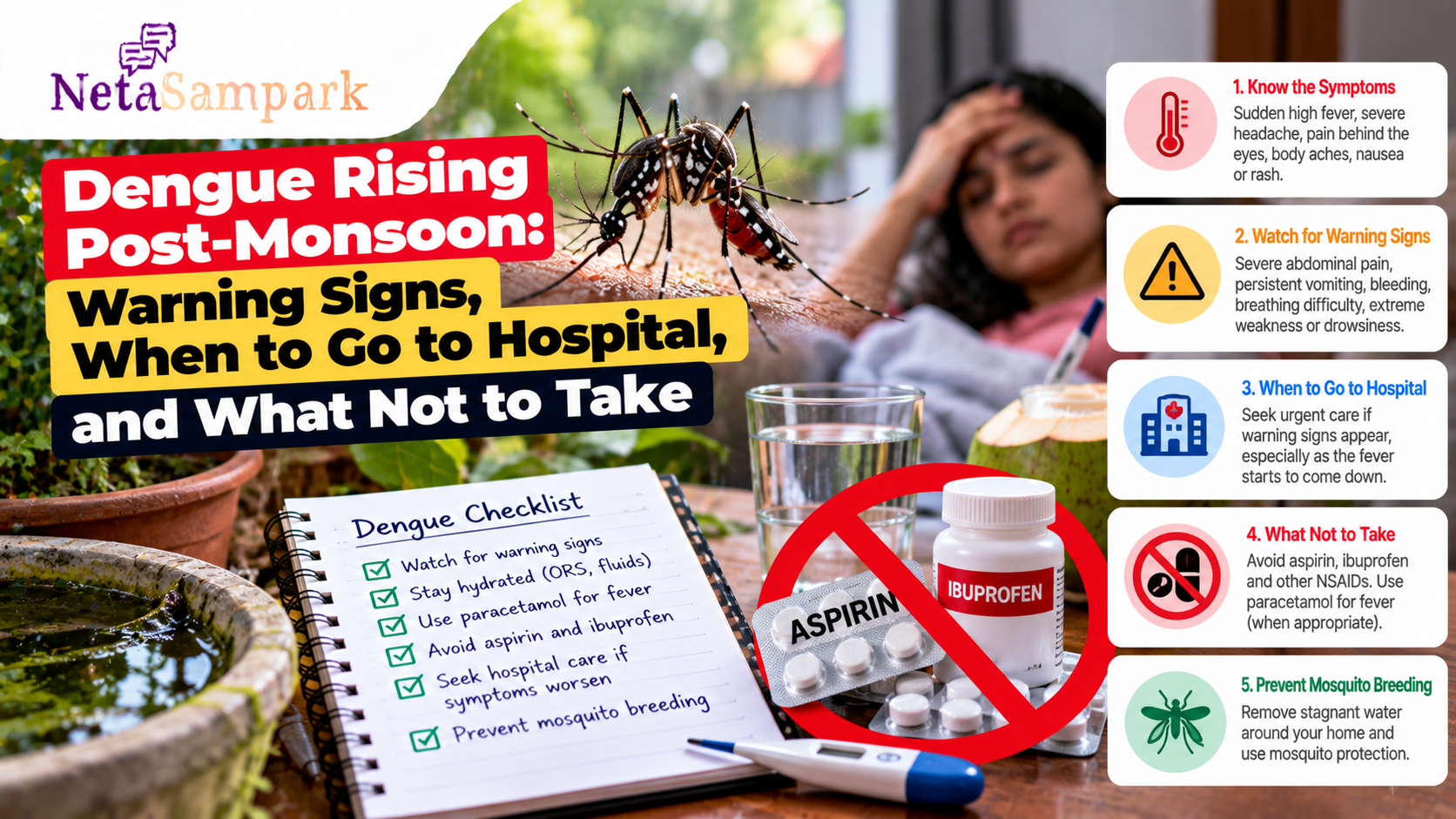
Dengue Rising Post-Monsoon: Warning Signs, When to Go to Hospital, and What Not to Take
Dengue cases can increase during and after the rainy season because the mosquitoes that transmit dengue breed in stagnant water, while warm and humid conditions support mosquito survival. The Aedes mosquito that spreads dengue is mainly active during the daytime. WHO notes that dengue transmission often peaks during and after rainy seasons. World Health Organization
Most people with dengue recover with appropriate supportive care. But some develop severe dengue, which can become life-threatening. The dangerous part is that warning signs can appear as the fever starts coming down, so a lower temperature does not always mean the illness is improving. World Health Organization
What Does Dengue Usually Feel Like?
Dengue can cause a sudden high fever along with several of these symptoms:
- Severe headache
- Pain behind the eyes
- Muscle, bone or joint pain
- Nausea or vomiting
- Rash
- Loss of appetite
- Fatigue
Symptoms commonly begin around 4–10 days after infection and may last for 2–7 days. World Health Organization
India's National Center for Vector Borne Diseases Control (NCVBDC) also lists abrupt high fever, severe frontal headache, pain behind the eyes, muscle and joint pains, nausea/vomiting and a measles-like rash among common dengue symptoms. Vector Borne Diseases Center
Fever Coming Down Does Not Always Mean Recovery
This is an important point for families.
The critical phase of dengue can occur around the transition from the febrile phase to the time when fever falls, commonly around days 3–7 after symptoms begin. A patient may appear to improve because the temperature has fallen while plasma leakage or other complications are beginning. World Health Organization
So don't use "the fever is gone" as the only sign that the patient is safe.
Warning Signs: When Should You Go to Hospital?
Seek urgent medical care if a person with suspected or confirmed dengue develops any warning sign.
1. Severe abdominal pain
Strong or persistent abdominal pain is a warning sign that should not be ignored. World Health Organization
2. Persistent or frequent vomiting
Repeated vomiting can contribute to dehydration and is itself a warning sign of potentially severe dengue. World Health Organization
3. Bleeding
Watch for:
- Bleeding from the nose
- Bleeding gums
- Blood in vomit
- Black or tarry stools
- Unusual skin bleeding or red spots/patches
- Heavy or unusual menstrual/vaginal bleeding
These require prompt medical attention. Vector Borne Diseases Center
4. Breathing difficulty or rapid breathing
Difficulty breathing, rapid breathing or signs of respiratory distress are emergency warning signs. World Health Organization
5. Extreme weakness, drowsiness or restlessness
A patient who becomes unusually sleepy, confused, restless or difficult to keep alert needs medical assessment. Vector Borne Diseases Center
6. Pale, cold or clammy skin
Cold, pale or clammy hands and feet can indicate circulatory problems and should be treated as an emergency warning sign. World Health Organization
7. Very thirsty or signs of dehydration
Extreme thirst, a dry mouth, reduced urine or inability to keep fluids down should prompt medical attention, particularly when accompanied by other warning signs. Vector Borne Diseases Center
When Should You Go to the Emergency Department Immediately?
Do not wait for a routine appointment if there is:
Bleeding + weakness
Severe abdominal pain + vomiting
Breathing difficulty
Confusion, unusual drowsiness or collapse
Cold, pale or clammy skin
Inability to drink or repeated vomiting
These can indicate severe dengue or complications requiring hospital management. India's 2023 National Guidelines classify dengue with warning signs as requiring observation/admission, while severe dengue requires emergency treatment and urgent referral. Vector Borne Diseases Center
What Can You Take for Fever?
For fever and body aches, paracetamol (acetaminophen) is generally the preferred medicine for dengue symptom relief, when appropriate for the individual. WHO recommends paracetamol and advises avoiding aspirin and ibuprofen because of bleeding risk. World Health Organization
India's NCVBDC clinical guidelines similarly recommend paracetamol for fever and specifically advise avoiding aspirin and NSAIDs. Vector Borne Diseases Center
However, don't exceed the recommended dose. The appropriate dose can depend on age, weight, liver health, other medicines and the formulation being used.
Children especially should receive medication according to their weight and a doctor's or pharmacist's instructions.
What Should You NOT Take?
Avoid aspirin
Aspirin can increase bleeding risk and should not be used for suspected dengue unless specifically directed by a doctor for a particular medical reason. World Health Organization
Avoid ibuprofen
Ibuprofen is an NSAID and should be avoided when dengue is suspected because of the potential increase in bleeding risk. World Health Organization
Be careful with other NSAID painkillers
Don't assume that another painkiller is safe simply because it isn't called aspirin or ibuprofen.
India's dengue guideline specifically advises avoiding NSAIDs. Vector Borne Diseases Center
If you're unsure whether a medicine belongs to this group, ask a doctor or pharmacist before taking it.
Don't self-medicate with antibiotics
Dengue is caused by a virus. Antibiotics do not treat dengue itself and should not be started on your own. WHO guidance notes that there is no specific antiviral treatment for dengue. World Health Organization
If a doctor suspects a bacterial infection as well, they may prescribe an antibiotic for that separate condition.
Don't start steroids on your own
Steroids are not routine self-treatment for dengue. WHO's dengue home-care guidance lists steroids among medicines to avoid without medical direction. IRIS
What Should You Drink?
Adequate fluid intake is an important part of supportive care.
India's dengue clinical guidelines advise adequate oral fluids, including ORS and coconut water, while cautioning against excessive hydration in infants and young children. Vector Borne Diseases Center
Depending on the person's condition, fluids may include:
- ORS
- Water
- Soups
- Coconut water
- Other appropriate fluids
If the patient is vomiting repeatedly or cannot drink enough, don't keep trying home treatment indefinitely. They may need medical assessment and, in some cases, intravenous fluids.
Do not force large amounts of fluid into someone who is struggling to breathe or is seriously unwell. Seek emergency care.
Do Platelets Automatically Mean Hospitalisation?
A platelet count is only one part of the clinical picture.
Dengue management also considers symptoms, warning signs, hydration, bleeding, blood pressure/circulation, urine output and laboratory trends such as haematocrit.
India's clinical guidelines note that a rapidly falling platelet count may indicate progression, while a rising haematocrit can be an early indicator of plasma leakage. Vector Borne Diseases Center
So don't make a hospital decision based on a single platelet number seen on a laboratory report.
The treating doctor should interpret the blood counts alongside the patient's symptoms and overall condition.
Do You Need a Dengue Test?
If dengue is suspected, consult a doctor. Diagnosis may involve blood testing depending on how long the person has been ill and the tests available.
NCVBDC advises people with suspected dengue symptoms to see a doctor, while WHO notes that laboratory testing can help confirm dengue and guide management. Vector Borne Diseases Center
The type and timing of test can matter, so don't assume that one negative test automatically rules out dengue.
Protect Other Family Members
A person with dengue can infect mosquitoes that bite them, allowing those mosquitoes to transmit the virus to other people.
During the early illness period, particularly while the patient has fever, reduce mosquito exposure by:
- Using mosquito nets
- Using appropriate mosquito repellents
- Wearing clothing that covers the arms and legs
- Using screens where possible
- Removing standing water around the home
WHO notes that infected people can transmit the virus to mosquitoes during the first several days of illness, so preventing mosquito bites around the patient is important. World Health Organization
Stop Mosquito Breeding Around Your Home
You don't need a large pool of water for Aedes mosquitoes to breed.
Check:
- Flower pots and trays
- Buckets
- Coolers
- Roof gutters
- Water-storage containers
- Discarded tyres
- Bottles and cans
- Construction-site containers
- Any object collecting rainwater
NCVBDC advises removing water from coolers and small containers at least weekly and warns that stagnant water in containers, drains and other locations can contribute to dengue risk. Vector Borne Diseases Center
Who Should Be Extra Careful?
Severe dengue can occur in anyone, but WHO identifies some groups as having greater risk, including people experiencing dengue infection for a second time, pregnant women, young children and older adults. World Health Organization
If someone in these groups develops suspected dengue, seeking medical advice early is particularly important.
A Simple Home-Monitoring Checklist
If a doctor has advised home management, keep watching the patient rather than only checking the temperature.
Track:
☑ Fever and when it started
☑ Ability to drink fluids
☑ Urine output
☑ Vomiting
☑ Abdominal pain
☑ Bleeding or unusual red spots
☑ Breathing
☑ Alertness and behaviour
☑ Any new or worsening symptom
If a warning sign appears, don't wait for the next scheduled blood test or appointment. Seek medical care.
Dengue: The 5 Things to Remember
1. Fever + body aches can be dengue, but symptoms alone cannot confirm it.
2. The dangerous phase can begin when the fever falls.
3. Severe abdominal pain, persistent vomiting, bleeding, breathing difficulty, unusual drowsiness or cold/clammy skin require urgent care.
4. Paracetamol is generally preferred for fever; avoid aspirin, ibuprofen and other NSAIDs unless a doctor specifically tells you otherwise.
5. Hydration, monitoring and early medical attention are more important than trying home remedies to "increase platelets."
Bottom Line
Dengue is often manageable with supportive care, but severe dengue can deteriorate quickly.
If you or a family member has suspected dengue, consult a healthcare professional and follow the recommended testing and monitoring plan. If warning signs appear, go to a hospital immediately rather than waiting for the fever to return or the next blood test. World Health Organization
And remember the key medicine rule:
Suspected dengue: paracetamol may be used for fever when appropriate; avoid aspirin, ibuprofen and other NSAIDs because of bleeding risk. World Health Organization
This article is for general health education and does not replace a medical examination or personalised advice from a qualified healthcare professional.