
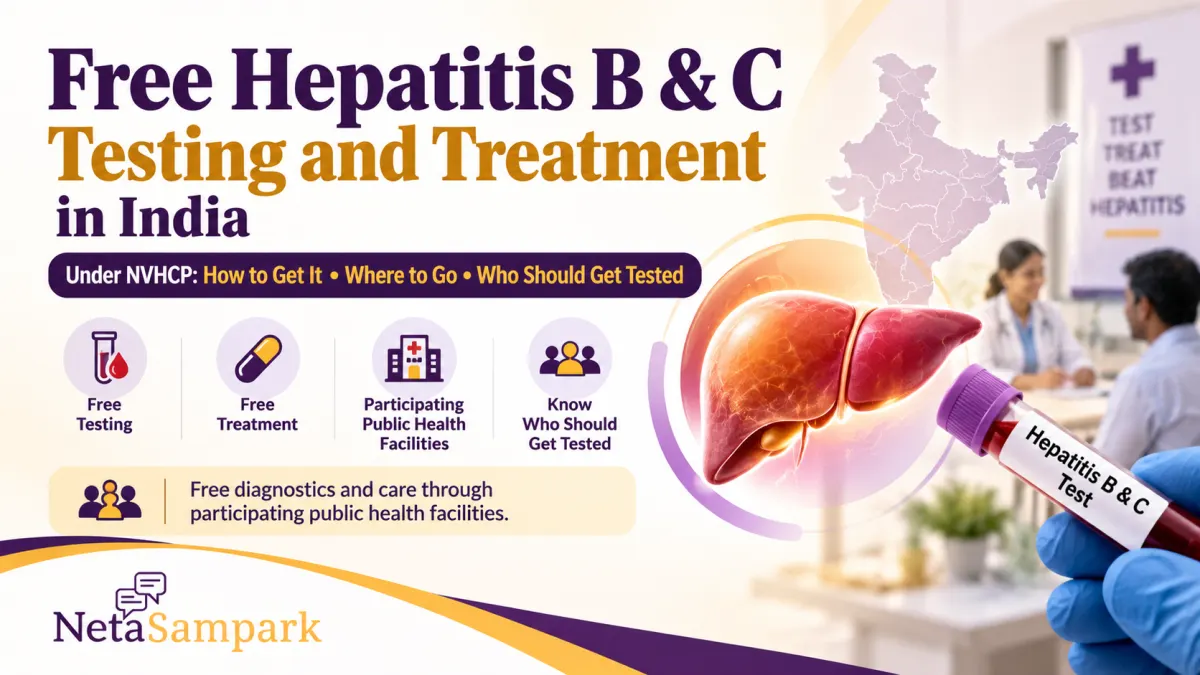
Hepatitis B and hepatitis C are viral infections that affect the liver. Both can remain undetected for years, even when a person feels healthy. Without appropriate diagnosis and care, chronic infection can lead to serious liver damage, cirrhosis and liver cancer.
The Government of India's National Viral Hepatitis Control Programme (NVHCP) provides free screening, diagnostic services and treatment for hepatitis B and C through participating public health facilities. The programme aims to improve early detection, connect people who test positive with appropriate care and reduce the long-term impact of viral hepatitis.
If you want to know where to get tested, how to find a government treatment centre, whether medicines are free and who should consider testing, this guide explains the process and links to official resources.
Last updated: 26 October 2026
Key Takeaways
- Free services: The NVHCP provides free hepatitis B and C testing, diagnostic services and treatment through participating facilities, subject to the programme's service arrangements.
- Where to start: Contact your nearest government district hospital or another public health facility offering NVHCP services.
- Find a treatment centre: Use the official NVHCP list of treatment sites.
- Official helpline: Call 1800-11-6666 for information about the programme and service locations.
- Who should consider testing: People with possible blood exposure, household or sexual contacts of someone with hepatitis B, people with suspected liver disease, pregnant women and other groups identified by clinical guidance.
- Hepatitis C can be cured: Direct-acting antiviral medicines can cure most people with hepatitis C.
- Hepatitis B can be controlled: Antiviral medicines can suppress the virus and reduce the risk of complications, although treatment is often long-term.
- Do not wait for symptoms: Both infections can be present without obvious signs.
What Is the National Viral Hepatitis Control Programme?
The National Viral Hepatitis Control Programme was launched by the Ministry of Health and Family Welfare in July 2018 to strengthen the prevention, diagnosis and management of viral hepatitis in India.
The programme focuses particularly on hepatitis B and hepatitis C, which can cause chronic infection and serious liver complications.
Its key objectives include:
- Improving access to screening and diagnosis.
- Providing appropriate treatment and clinical follow-up.
- Preventing transmission through safer healthcare practices and public awareness.
- Supporting hepatitis B vaccination and prevention of mother-to-child transmission.
- Strengthening referrals and monitoring for people diagnosed with viral hepatitis.
The programme is integrated with existing public health services, including the National Health Mission. Services are delivered through designated facilities and are expanded according to programme arrangements.
Official programme website: National Viral Hepatitis Control Programme
The programme also provides a directory of treatment sites and a helpline to help people identify the services available in their area.
What Free Services Are Available Under NVHCP?
The programme provides access to screening, diagnostic testing and treatment for hepatitis B and hepatitis C through participating public health facilities.
The exact tests and clinical services offered at a particular facility may depend on its designation, available equipment and referral arrangements.
| Service | What it means for patients |
|---|---|
| Initial screening | A screening test helps identify a possible infection. |
| Confirmatory or follow-up testing | Additional tests establish whether infection is present and help guide care. |
| Clinical assessment | A healthcare professional evaluates the infection and the condition of the liver. |
| Hepatitis B management | Eligible patients receive appropriate monitoring and antiviral treatment when indicated. |
| Hepatitis C treatment | Eligible patients can access antiviral treatment through programme services. |
| Follow-up | Further tests and clinical reviews help assess treatment response and ongoing health needs. |
| Referral services | Patients who need specialist care can be referred to an appropriate facility. |
A positive screening result does not always mean that a person has an active infection requiring treatment. The next steps depend on the type of test, confirmatory results and clinical assessment.
How to Get Free Hepatitis B and C Testing in India
You do not need to begin by visiting a private laboratory. A practical first step is to contact a participating government facility and ask about NVHCP testing and treatment services.
Step 1: Find a government treatment centre
Open the official NVHCP treatment-centre directory:
Find hepatitis treatment sites across India
The directory lists facilities by state, district and facility name.
Search for your state and district, then identify the nearest listed centre. Depending on your location, this may be a government medical college, district hospital or another designated facility.
If the nearest centre does not provide the test you need, ask about the appropriate referral facility.
Step 2: Contact the facility before visiting
Call the hospital or visit its enquiry counter and ask:
- Does this facility provide hepatitis B and hepatitis C testing under NVHCP?
- Are the initial screening tests available here?
- Are confirmatory tests or viral-load tests available at the same facility?
- Which department handles hepatitis patients?
- Do I need a referral or an appointment?
- What documents, if any, should I bring?
This can save you an unnecessary journey, particularly if specialist services or certain diagnostic tests are available only at designated centres.
Step 3: Explain why you want to be tested
Tell the healthcare professional if you have had a possible exposure to infected blood, have a household or sexual contact with hepatitis B, have been advised to undergo testing, are pregnant or have symptoms suggesting liver disease.
You do not need to wait until you develop symptoms to discuss testing.
The clinician will determine which tests are appropriate based on your circumstances and the applicable guidelines.
Step 4: Complete the recommended tests
Hepatitis B and hepatitis C use different testing pathways.
For hepatitis B, the initial test commonly used to screen for infection is the hepatitis B surface antigen test, known as HBsAg. Additional tests may be needed to determine whether the infection is acute or chronic, assess viral activity and evaluate liver health.
For hepatitis C, the initial screening test commonly detects antibodies to the virus. If the antibody test is positive, an HCV RNA test is generally required to establish whether there is a current infection.
The healthcare team will explain which tests are needed and how to obtain the next stage of care.
Step 5: Discuss the result and next steps
If your screening result is negative, the clinician can advise whether further testing is needed based on the timing of a possible exposure and your risk factors.
If a result is positive, ask about confirmatory testing, assessment of liver health, treatment eligibility and follow-up arrangements.
Do not start, stop or change antiviral medicines without medical advice.
Where to Go for Free Hepatitis Treatment
The NVHCP website provides an official list of treatment sites across India.
Start here: NVHCP Treatment Centres Directory
When using the directory:
- Select your state or union territory.
- Identify your district.
- Check the listed hospital or treatment facility.
- Contact the facility to confirm that the required service is currently available.
- Ask whether you can access testing directly or need a referral.
- If the facility does not provide the service, request the nearest designated centre.
The directory is particularly useful for people searching for government hepatitis treatment in states such as Karnataka, Maharashtra, Tamil Nadu, Andhra Pradesh, Telangana, Kerala, Uttar Pradesh and West Bengal.
Availability can vary between facilities. Do not assume that every listed centre provides every diagnostic test on site.
Need help finding a centre?
The NVHCP official website lists this helpline:
1800-11-6666
Call to ask about hepatitis services, programme information and treatment locations. Confirm the operating hours and availability of the service when calling.
You can also visit the official NVHCP contact page.
Who Should Get Tested for Hepatitis B and C?
Hepatitis testing is important because both infections may remain asymptomatic for a long time. Testing decisions should take account of possible exposure, medical history, pregnancy and clinical guidance.
1. People who may have been exposed to infected blood
Hepatitis B and C can spread through exposure to infected blood. Possible exposures include unsafe injections, inadequately sterilised medical or dental equipment, shared needles or other equipment that can carry blood, and unscreened blood transfusions.
If you believe you have had a possible exposure, seek medical advice promptly. The appropriate test and timing depend on the circumstances.
2. Household and sexual contacts of people with hepatitis B
Hepatitis B can spread through infected blood and certain body fluids, including during sexual contact and from an infected mother to her baby.
People who share a household with someone who has hepatitis B, and sexual partners of an infected person, should discuss testing and prevention with a healthcare professional.
Close contacts may also need assessment for hepatitis B vaccination if they are not already protected.
Hepatitis C is primarily transmitted through blood exposure. Its transmission risks and prevention measures differ from those of hepatitis B.
3. Pregnant women
Hepatitis B testing during pregnancy is important because infection can pass from mother to child, particularly around childbirth.
The government health programme includes screening of pregnant women and measures to help prevent transmission to newborns. If a pregnant woman tests positive, timely clinical assessment helps determine the appropriate care for both mother and baby.
Pregnant women should attend antenatal appointments and follow the testing recommendations of their healthcare team.
4. Healthcare workers and people with occupational exposure
Healthcare workers who may be exposed to blood or contaminated sharps should follow occupational health guidance on hepatitis B vaccination, testing and post-exposure management.
Anyone who experiences a needlestick injury or similar exposure should seek prompt medical assessment rather than waiting for symptoms.
5. People with suspected liver disease or unexplained abnormal liver tests
Testing may be recommended for people with jaundice, persistently abnormal liver enzymes, suspected chronic liver disease or other clinical findings that could indicate viral hepatitis.
These symptoms and findings can have many causes, so laboratory testing and medical assessment are needed.
6. People living with HIV or other conditions that may increase risk
People living with HIV, people with a history of certain blood exposures and individuals receiving care for other conditions associated with viral hepatitis risk may be advised to undergo testing.
The clinician can recommend appropriate tests based on individual circumstances and current guidance.
7. People who have injected drugs or shared injecting equipment
Sharing needles, syringes or other equipment contaminated with blood can transmit both hepatitis B and hepatitis C.
People who have experienced this type of exposure should discuss testing and prevention with a healthcare professional. Confidential, non-judgmental care is important for connecting people to treatment and preventing further transmission.
Important: This list is not exhaustive. You can discuss hepatitis testing with a healthcare professional even if you do not identify with one of these groups.
Hepatitis B vs Hepatitis C: What Is the Difference?
Although both viruses affect the liver, their prevention, testing and treatment pathways differ.
| Feature | Hepatitis B | Hepatitis C |
|---|---|---|
| Main transmission routes | Infected blood and certain body fluids; mother-to-child transmission | Primarily exposure to infected blood |
| Initial screening | HBsAg is commonly used | Anti-HCV antibody test is commonly used |
| Confirmatory or additional testing | Further blood tests, including HBV DNA when indicated | HCV RNA testing to identify current infection |
| Vaccine | An effective vaccine is available | No effective vaccine is currently available |
| Treatment | Antiviral medicines can suppress chronic infection and reduce complications | Direct-acting antiviral medicines can cure most infections |
| Long-term follow-up | May be needed even when treatment is not started | Follow-up confirms treatment response and assesses liver health |
A clinician should interpret test results and determine the appropriate next steps. The two infections should not be treated as though they have identical testing or treatment requirements.
Is Hepatitis C Curable Under NVHCP?
Yes. Hepatitis C can be cured in most people with appropriate antiviral treatment.
Direct-acting antiviral medicines target the virus and can achieve sustained virological response, which means the virus is no longer detectable at the recommended follow-up assessment.
The precise regimen and duration depend on clinical factors, including previous treatment, liver health, other medical conditions and potential drug interactions.
A positive hepatitis C antibody test alone does not establish that an active infection is present. An HCV RNA test is generally needed to confirm current infection.
Patients should complete the prescribed course and attend follow-up appointments as advised.
Can Hepatitis B Be Cured?
Hepatitis B requires a different approach.
Antiviral medicines can suppress the virus and reduce the risk of cirrhosis and liver cancer. However, current treatment does not routinely eliminate the virus from every person with chronic hepatitis B.
Not everyone with hepatitis B needs immediate antiviral medication. The decision depends on clinical assessment, viral activity, liver inflammation, liver damage and other relevant factors.
Some people require long-term treatment and monitoring. Others may need regular follow-up even when medication is not currently indicated.
Do not stop hepatitis B medication on your own, even if you feel well or a follow-up test shows improvement.
What Happens After a Positive Hepatitis Test?
A positive screening result is a reason to follow up, not a reason to panic.
The next steps may include:
- Confirmatory testing where required.
- Blood tests to assess viral activity.
- Liver function tests and an assessment of liver damage.
- Review of other health conditions and medicines.
- Evaluation for antiviral treatment.
- Counselling on preventing transmission.
- Follow-up appointments and monitoring.
The exact pathway differs for hepatitis B and hepatitis C. Your treating team will explain the results and recommend care based on your clinical situation.
Until you have received advice, avoid sharing razors, needles or other items that may carry blood. Cover open wounds and ensure that medical or dental procedures use properly sterilised equipment and safe injection practices.
Hepatitis B and C are not spread through ordinary social contact such as hugging, sharing a meal or sitting beside someone.
Can You Get Hepatitis B Vaccination for Free?
Hepatitis B vaccination is an important prevention measure.
India's Universal Immunisation Programme includes hepatitis B vaccination for infants, including a birth dose. Vaccination is also recommended for eligible people who have not been protected, depending on their age, medical circumstances and risk of exposure.
The NVHCP includes preventive measures involving hepatitis B vaccination for specified groups. Availability and eligibility for vaccination at a particular facility may vary.
Ask your government health facility whether hepatitis B vaccination is available and whether you are eligible.
There is currently no effective vaccine for hepatitis C. Prevention therefore depends on safe blood and injection practices, avoiding the sharing of equipment contaminated with blood, and testing and treatment when indicated.
How to Reduce the Risk of Hepatitis B and C
Practical prevention steps include:
- Use only sterile, single-use needles and syringes where required.
- Choose healthcare and dental facilities that follow proper sterilisation procedures.
- Ensure that blood and blood products come through authorised, screened services.
- Do not share needles, razors or other personal items that may carry blood.
- Ask about hepatitis B vaccination if you are not protected.
- Follow medical advice after possible blood exposure.
- Attend recommended testing and follow-up appointments.
- If you test positive, discuss how to protect household members and sexual partners with your healthcare professional.
Testing, vaccination where appropriate, safe healthcare practices and timely treatment all contribute to preventing transmission and reducing complications.
Official Government Links for Hepatitis Testing and Treatment
Use these official resources to find programme information and understand the recommended care pathway.
1. National Viral Hepatitis Control Programme
The main programme website provides information about the national initiative, guidelines and service arrangements.
2. Find a treatment centre
https://nvhcp.mohfw.gov.in/Landingpage/List_of_treatment_centers
Search the treatment-centre directory by state and district to identify participating facilities.
3. NVHCP helpline and contact information
https://nvhcp.mohfw.gov.in/contact
The programme lists 1800-11-6666 for questions and complaints.
4. National hepatitis guidelines
https://nvhcp.mohfw.gov.in/Guidelines
The guidelines section includes national guidance on viral hepatitis diagnosis, laboratory testing and management.
5. Ministry of Health and Family Welfare
Use the Ministry's official website for national health programme information and government announcements.
Frequently Asked Questions
Is hepatitis B testing free in government hospitals in India?
Free screening and diagnostic services for hepatitis B are provided through participating facilities under the NVHCP. Contact the facility first to confirm which tests are available and whether a referral is required.
Is hepatitis C testing free in India?
The NVHCP provides free screening and diagnostic services for hepatitis C through participating public health facilities. Additional testing may be needed after an initial positive screening result.
Is hepatitis C treatment free under NVHCP?
The programme provides free treatment for eligible patients through designated services. Contact a participating treatment centre to confirm the current process, availability and clinical requirements.
Is hepatitis B treatment free under NVHCP?
The programme provides hepatitis B management and treatment through participating facilities. The clinician determines whether antiviral treatment is indicated and arranges the appropriate care.
How can I find the nearest government hepatitis treatment centre?
Use the official NVHCP treatment-centre directory, select your state and district, and contact the listed facility before visiting.
What is the NVHCP helpline number?
The official programme website lists 1800-11-6666 for programme queries and complaints.
Can hepatitis B or C exist without symptoms?
Yes. Both infections can remain undetected for long periods. Testing is important when recommended based on possible exposure, medical history or clinical guidance.
Does a positive hepatitis C antibody test mean I currently have hepatitis C?
Not necessarily. A positive antibody test indicates previous exposure to the virus. An HCV RNA test is generally required to establish whether a current infection is present.
Is hepatitis B curable?
Chronic hepatitis B can be controlled with antiviral treatment, but treatment does not routinely eliminate the virus in every patient. Ongoing monitoring may be needed.
Can hepatitis C be cured?
Yes. Direct-acting antiviral treatment cures most people with hepatitis C when appropriately prescribed and completed.
Should pregnant women be tested for hepatitis B?
Yes. Screening during pregnancy is an important part of preventing transmission from mother to child. Pregnant women should follow the testing and care recommendations of their antenatal healthcare team.
Conclusion
Free hepatitis B and C testing and treatment through India's National Viral Hepatitis Control Programme can help people identify infection early, access appropriate care and reduce the risk of serious liver complications.
If you want to get tested, begin by contacting a government hospital or using the official NVHCP treatment-centre directory. Confirm the available services before visiting, complete the recommended tests and follow up with a healthcare professional if a result is positive.
Remember that hepatitis B and hepatitis C have different testing and treatment pathways. Hepatitis C can be cured in most cases, while hepatitis B can often be controlled through appropriate treatment and long-term monitoring.
For more public-health explainers, government scheme guides and practical information for people across India, visit NetaSampark.
This article is for general information and is not a substitute for medical advice, diagnosis or treatment. Consult a qualified healthcare professional for individual testing and treatment decisions.