
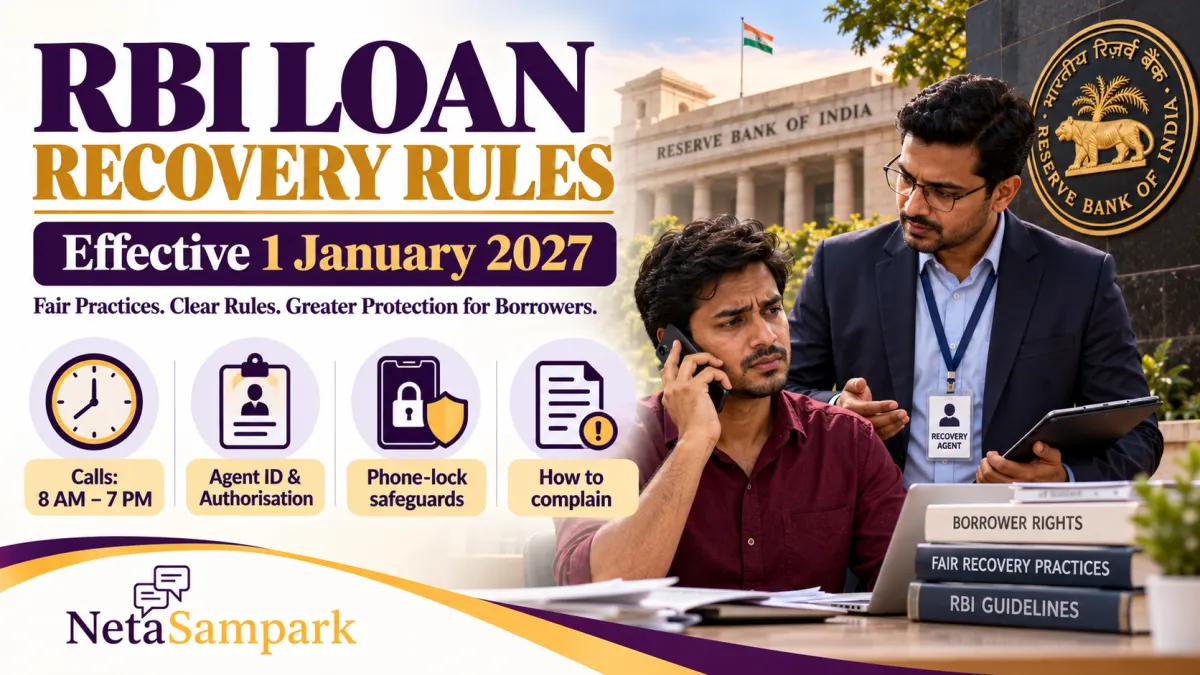
RBI’s New Loan Recovery Rules From 1 January 2027: Calling Hours, Agent ID, Phone-Lock Limits and How to Complain
Receiving repeated calls from a bank or loan recovery agent? From 1 January 2027, a more detailed RBI framework sets out how covered banks must handle loan recovery, identify their agents and protect borrowers from harassment.
Here’s what changes, what recovery agents cannot do, and where you can complain if things go wrong.
1 What Are the Permitted Calling Hours?
Recovery agents generally must contact borrowers between 8 am and 7 pm. Contact outside these hours is allowed only when the borrower has expressly requested or authorised it under the applicable directions.
Agents must not:
- Make repeated or threatening calls.
- Use abusive language or intimidation.
- Shame borrowers publicly or threaten their family.
- Contact relatives, friends or colleagues to pressure the borrower.
- Share personal loan details or recordings publicly.
These protections build on RBI’s existing recovery-agent instructions, which already prohibit harassment and calls before 8 am or after 7 pm.
2 Must a Recovery Agent Show ID?
Yes. Under the new framework, borrowers should be able to verify who is contacting them.
Recovery agents must identify themselves and the bank they represent. They are required to carry valid identification and an authorisation letter, along with applicable notices.
Banks must also inform borrowers about the recovery agency and authorised agent before recovery proceedings begin, and communicate relevant changes. Banks are expected to maintain an updated list of their empanelled recovery agencies on their websites.
Practical tip: If someone demands money over the phone or visits your home, verify their identity directly with the lender using its official customer-care number. Do not transfer money to a personal account just because an agent asks you to.
3 Can a Bank Lock Your Phone Over an Unpaid Loan?
The new framework addresses technology-based restrictions on financed mobile phones, tablets and laptops. It does not give lenders unlimited power to disable a device.
Key safeguards include:
- Technology-based restrictions cannot begin until the loan is at least 30 days past due.
- The full set of permitted restrictions can take effect only after the loan is at least 60 days past due, subject to the applicable rules.
- Essential functions, including incoming calls, SMS and emergency SOS, must remain available.
- Lenders and their service providers cannot access personal data such as contacts, messages, call logs, photos or location history for loan recovery through the device-locking mechanism.
- After full repayment, the lender must promptly disable or relinquish control of the restriction mechanism.
If a bank wrongly restricts a device, or delays restoring its functions after repayment due to its own fault, the framework provides compensation of ₹250 per hour, capped at the amount of the loan disbursed.
These safeguards are subject to the applicable directions and the terms governing the financed device.
4 How to Complain About Loan Recovery Harassment
If an agent is threatening you, calling repeatedly outside permitted hours or contacting your family to pressure you, take these steps.
Step 1: Keep evidence
Save call logs, messages, WhatsApp chats, payment demands and the agent’s details. Keep dates and times of calls or visits.
Step 2: Complain to the lender
Write to the bank or regulated lender’s grievance redressal officer. Explain what happened, identify the agent or agency if possible, and attach your evidence. Keep the complaint reference number.
Step 3: Escalate to the RBI
If the lender does not respond within 30 days, rejects your complaint, or gives an unsatisfactory response, you may be able to complain through the RBI’s Complaint Management System, subject to the scheme’s eligibility requirements.
File online at RBI Complaint Management System.
You can also find the applicable recovery-agent requirements in the RBI’s August 2022 circular.
If you face threats of violence or immediate danger, contact the police. You do not have to tolerate intimidation just because a loan is outstanding.
5 Do These Rules Cancel Your Loan?
No. The new framework governs how covered lenders recover money. It does not automatically waive EMIs, cancel interest or erase a legitimate debt.
Borrowers should continue to check their loan statements, ask for a clear breakdown of outstanding dues and use the lender’s official payment channels.
Frequently Asked Questions
When do the new rules take effect?
The new framework is scheduled to take effect on 1 January 2027.
Can a recovery agent call me at night?
The general permitted window is 8 am to 7 pm. Contact outside it is allowed only where expressly requested or authorised under the applicable directions.
Can agents threaten to contact my relatives or employer?
Threats, harassment and using relatives or colleagues to pressure a borrower are prohibited recovery practices.
Can my phone be completely disabled for a missed EMI?
No. The new framework sets conditions and safeguards for technology-based restrictions on financed devices, including minimum overdue periods and protection for essential functions.
Does every lender follow exactly the same directions?
Not necessarily. The RBI has issued directions across different categories of regulated entities. Check which rules apply to your particular lender and loan.
Official and reference links
- RBI — Recovery-agent instructions
- RBI Complaint Management System
- Economic Times — New recovery rules explained
Information checked on 26 October 2026. The detailed framework is scheduled to take effect on 1 January 2027; borrowers should consult the applicable RBI directions for their lender category.